international
Man reunited with mum decades after adoption
https://www.bbc.co.uk/news/articles/ckgz8k07lr1o
Man reunited with mum decades after adoption
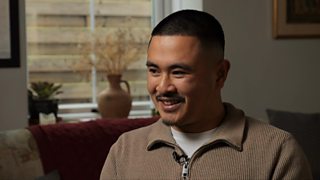
ByMarcus Boothe
West of England
- Published2 April 2026
A man who was adopted from Vietnam and recently travelled thousands of miles back there to meet his birth mother said the journey helped him understand “the missing piece of the puzzle” in his life.
Ike Robin, 27, from Bath, was adopted when he was six months old, and raised in Brighton with his three adopted sisters from China.
Throughout his life, Ike said he had questions about his heritage and identity and wanted to know how different life would be if he had not been adopted.
He said he has suffered from ‘imposter syndrome’, adding he feels “lucky” but there are moments he feels “this was not the life I was meant to have”.
Ike was born with two holes in his heart and severely malnourished. He said he owes his life to his adoptive family.
Now working as a nanny, Ike said he always knew he was adopted, but the questions around where he came from grew stronger as he got older.
“When I was younger, being adopted didn’t mean too much to me,” he said. “As I got older, I questioned more what my life would have looked like if I wasn’t adopted.”
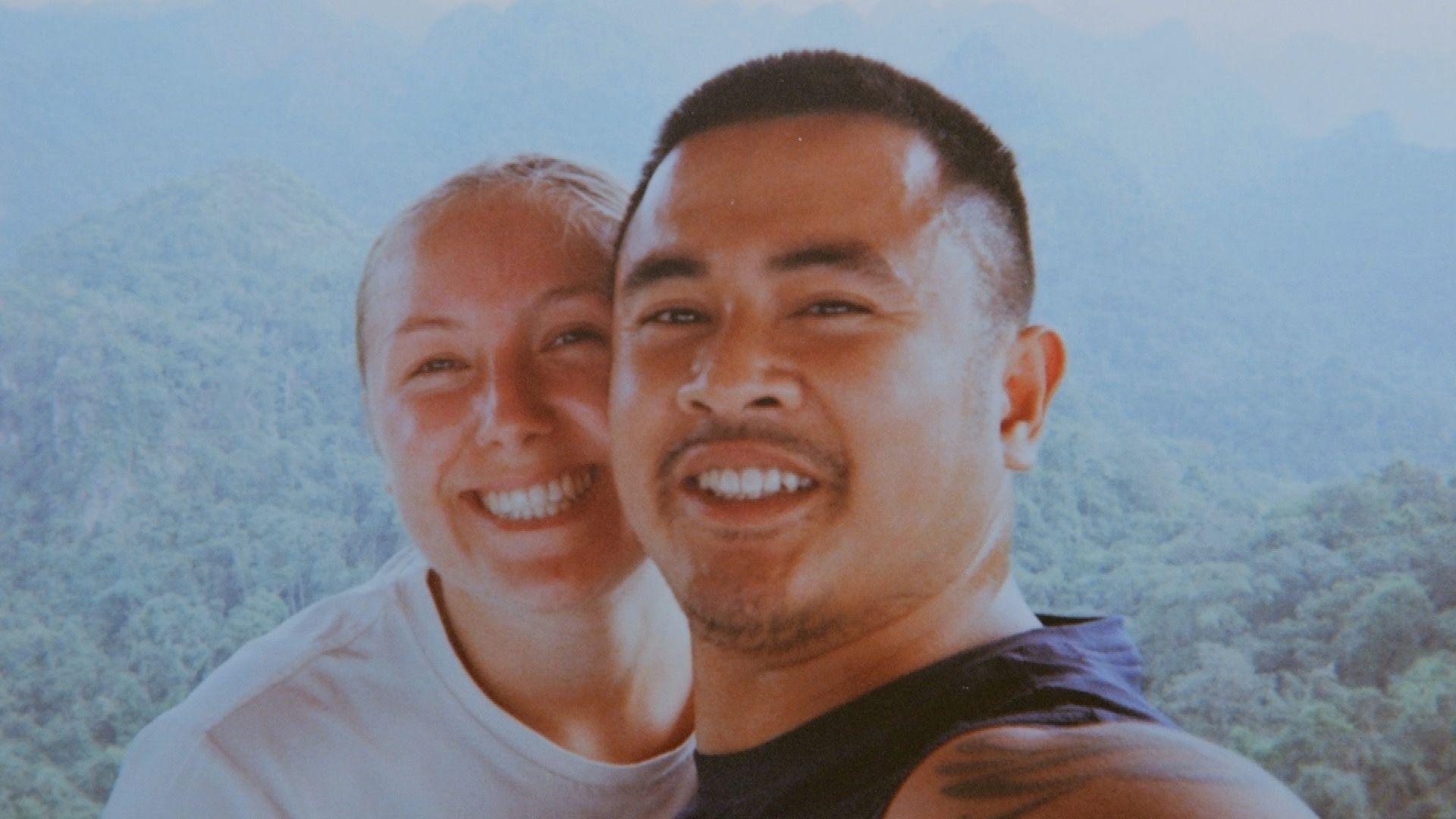
At the end of 2025, he travelled across Vietnam with his girlfriend and adoptive parents before finally meeting his birth mother for the first time in nearly three decades.
“I didn’t know what I was meant to feel, because this is my mum, but she’s also a stranger,” he said.
When she arrived, Ike said he recognised her immediately.
“I just instantly knew who my mum was,” he said. “It was an instinctive feeling.”
At his birth mother’s request, her identity is not being revealed.
Ike expected to only meet his biological mother, but was instead greeted by his siblings, cousins and grandmother.
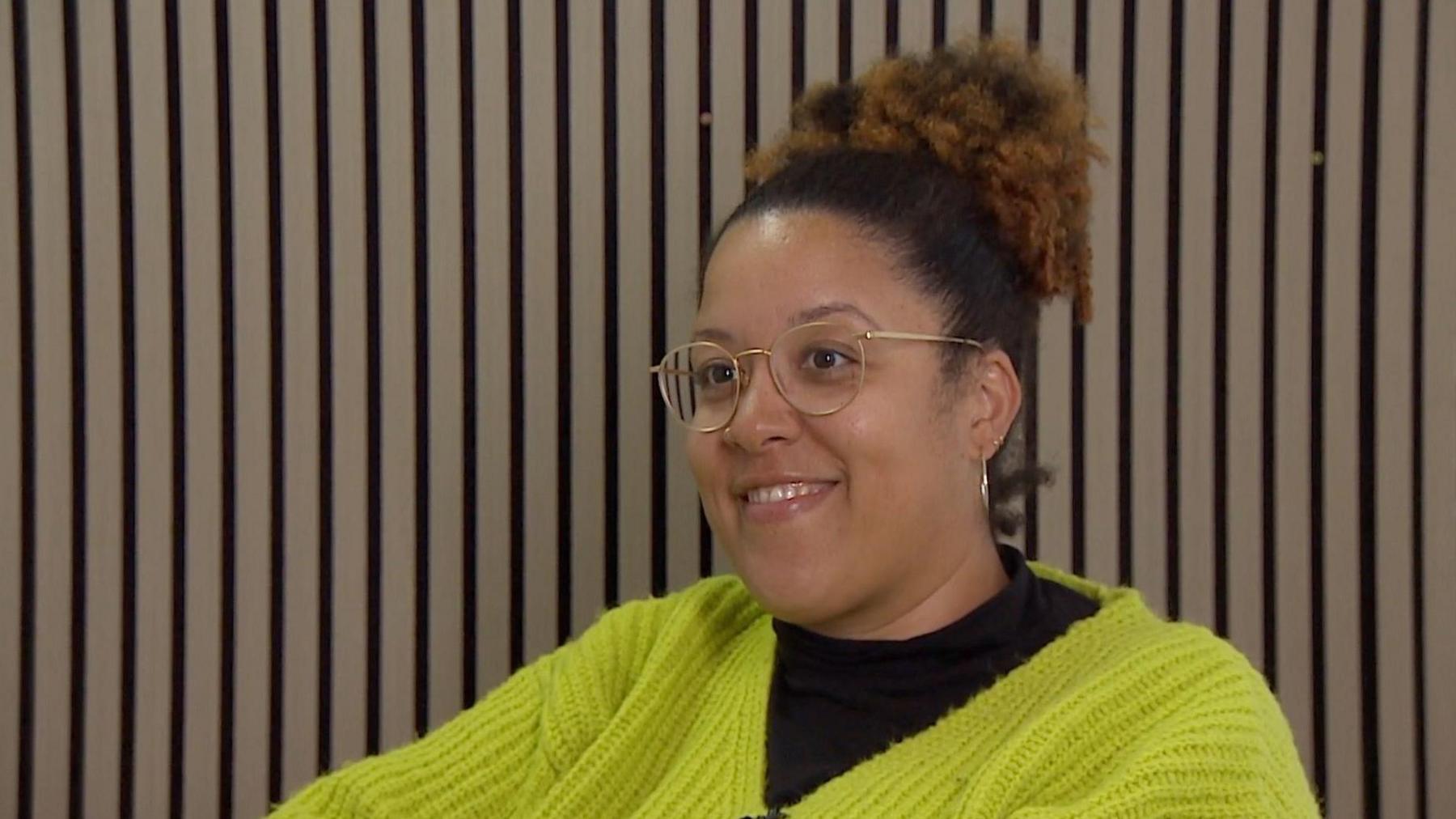
Psychotherapist Kimberly Fuller said his experience reflects the complex identity questions many internationally adopted people can face in adulthood.
She said adopted children can struggle with “identity and a sense of belonging”, particularly as they reach adolescence and later life.
“For some children they can kind of blend in with their families and people don’t necessarily know that they’re adopted, and they can hide that part of their identity.
“However if it’s a transracial adoption it’s really hard to do that from the outset, you’re already different and then there’s an added obvious difference in that you look different to your family,” she said.
That can mean people ask questions without considering how that feels or how that could be received, Fuller added.
She explained children can feel disconnected not only from their birth family but also from their culture, language and visible identity.
Fuller also said adoptees can experience conflicting emotions, including gratitude for the life they have been given while also grieving what has been lost.
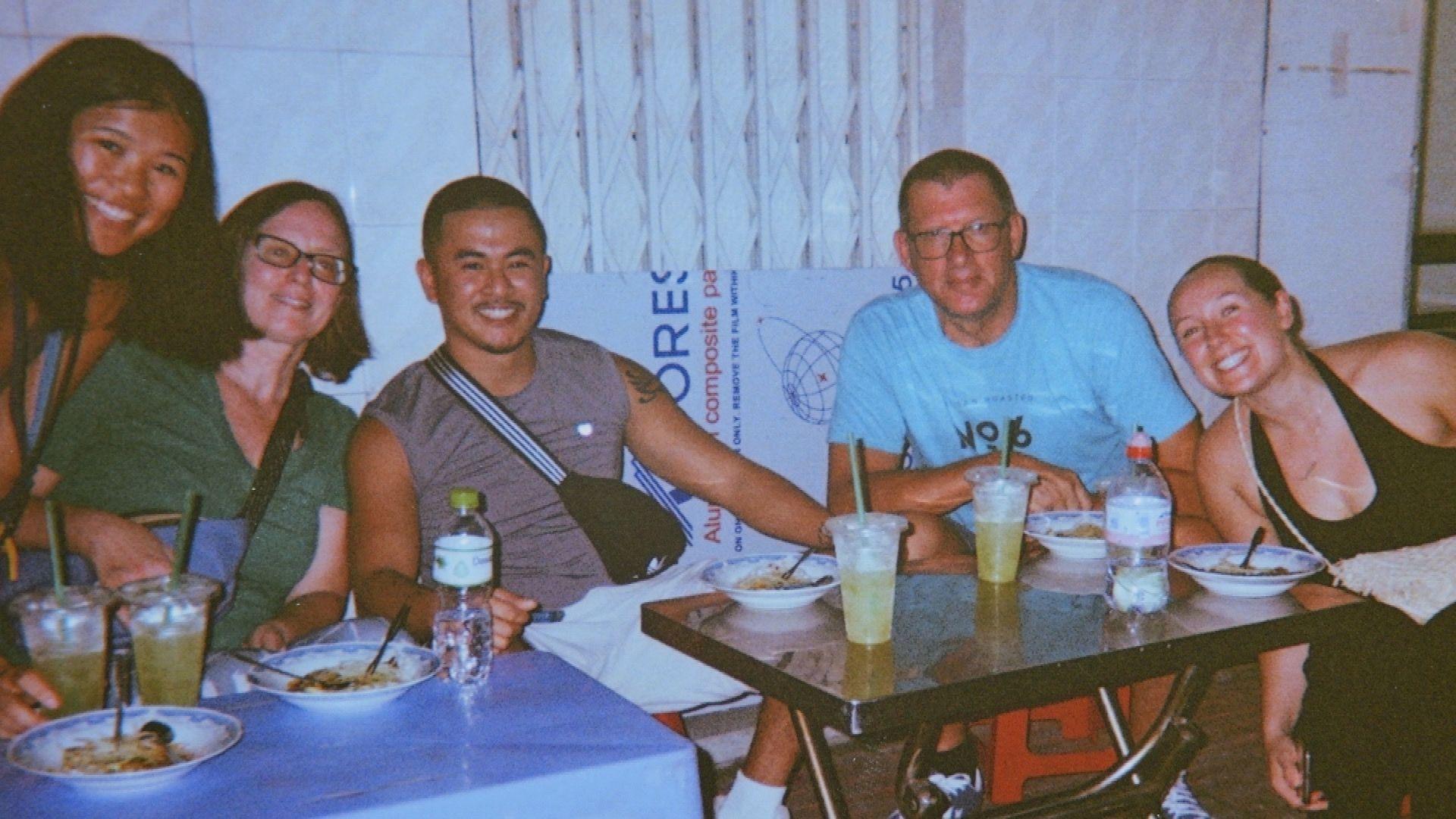
For Ike’s adoptive mother, the reunion was emotional but not threatening.
“I never thought that I was his only mother,” Julia Fleming said. “She’s his mum, and I’m his mum.”
She said the family had always tried to keep their children connected to their heritage, and had supported contact with Ike’s birth mother since he was seven.
Ike said the reunion was not about blame, but understanding.
“The main message I wanted to get across was that I don’t have any bad feelings towards her,” he said. “This can be the start of a new beautiful journey.”
Uncertainty for families as China ends foreign adoptions
https://www.bbc.co.uk/news/articles/crmwrpe3m3do
Uncertainty for families as China ends foreign adoptions
Nathan Williams
BBC News
- Published6 September 2024
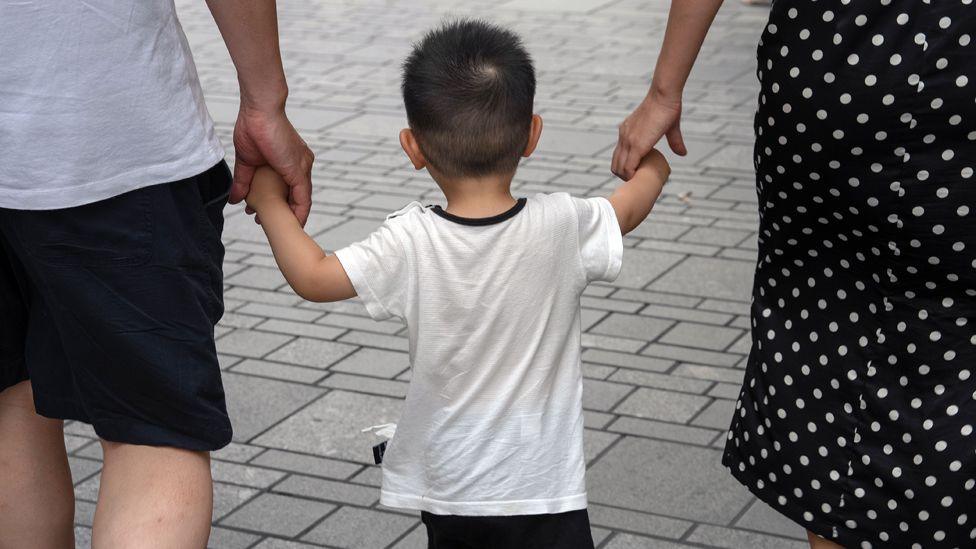
China has announced that it is ending the practice of allowing children to be adopted overseas, bringing uncertainty to families currently going through the process.
A spokeswoman said that the rule change was in line with the spirit of international agreements.
At least 150,000 Chinese children have been adopted abroad in the last three decades.
More than 82,000 have gone to the US, a greater number than anywhere else in the world.
At a daily briefing Thursday, foreign ministry spokeswoman Mao Ning said in the future Beijing would only allow foreign nationals who are relatives to adopt Chinese children.
She did not explain the reason for the decision, other than saying it was in line with international agreements.
Ms Mao thanked families “for their desire and love in adopting children from China”.
The ban on foreign adoptions has created uncertainty for hundreds of families in the US currently going through the process of adopting children from China.
In a call with US diplomats in China, Beijing said it would “not continue to process cases at any stage” other than those cases covered by an exception clause. This position was confirmed by spokeswoman Ms Mao.
Washington is seeking clarification from China’s civic ministry.
China’s controversial one-child policy, introduced in 1979 when the country was worried about a surging population, forced many families to abandon their children.
Families that violated the rules were fined and, in some cases, lost jobs. In a culture that historically favours boys over girls, it often meant that female babies were given up.
International adoption was formalised in the 1990s, and since then tens of thousands of children have been adopted, with about half going to parents in the US – including celebrities like Meg Ryan and Woody Allen.
However, the international adoption programme has at various times come under criticism. In 2013, Chinese police rescued 92 abducted children and arrested suspected members of a trafficking network.
Critics at the time pointed to China’s one-child policy and adoption laws, which they said had created a thriving underground market for buying children.
A number of countries have expressed concerns about international adoptions.
Denmark has closed its only overseas adoption agency, over concerns about fabricated documents. The Netherlands has also said it will no longer allow its citizens to adopt children from abroad.
But Beijing has also altered the way it views children. In stark contrast to the position taken by officials at end of the 1970s, the country’s leaders now worry there are not enough babies being born to sustain the population.
In 2016 China scrapped the one-child policy and in 2021 Beijing formally revised its laws to allow married couples to have up to three children.
In recent years, the Chinese government also offered tax breaks and better maternal healthcare, among other incentives, in an attempt to reverse, or at least slow, the falling birth rate.
But these polices have not lead to a sustained increase in births, and in 2023 the country’s total population fell for the first time in 60 years.